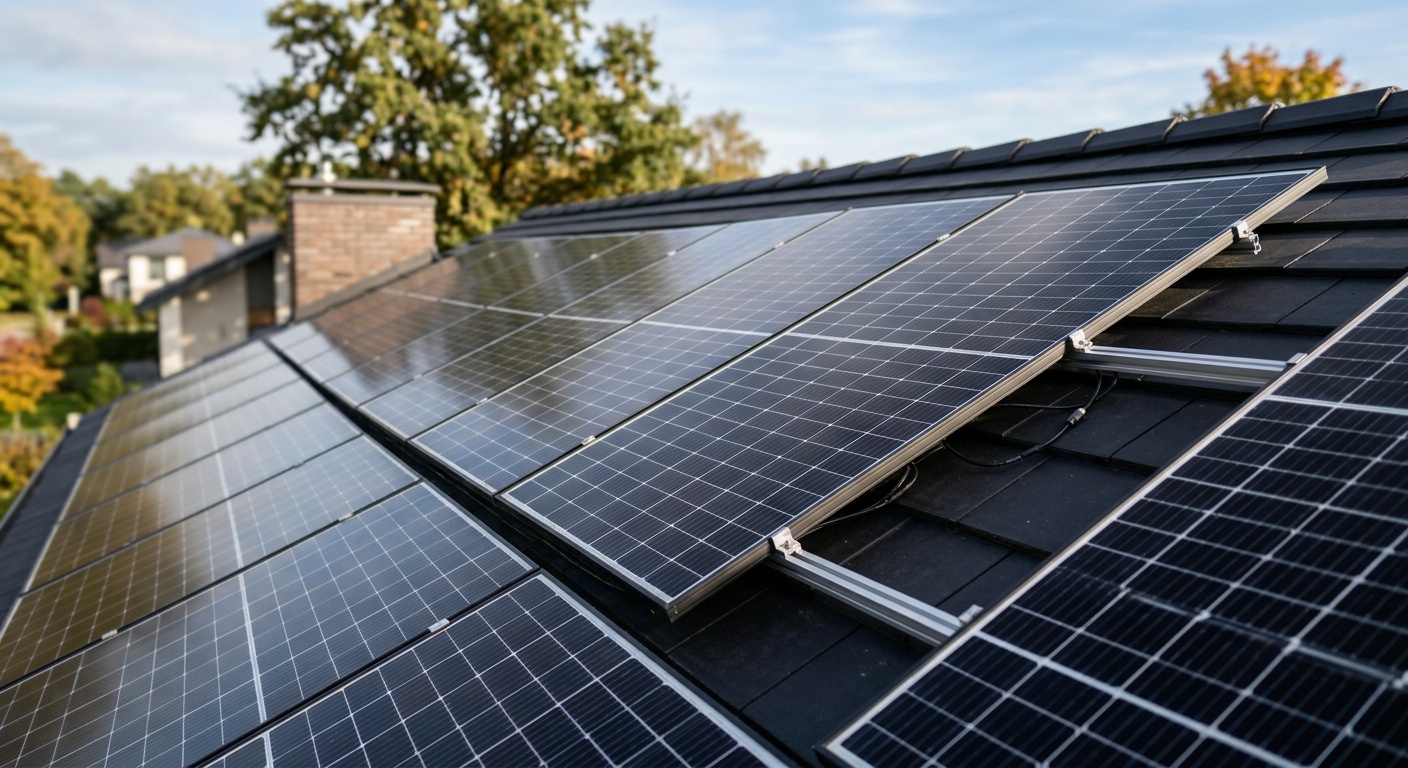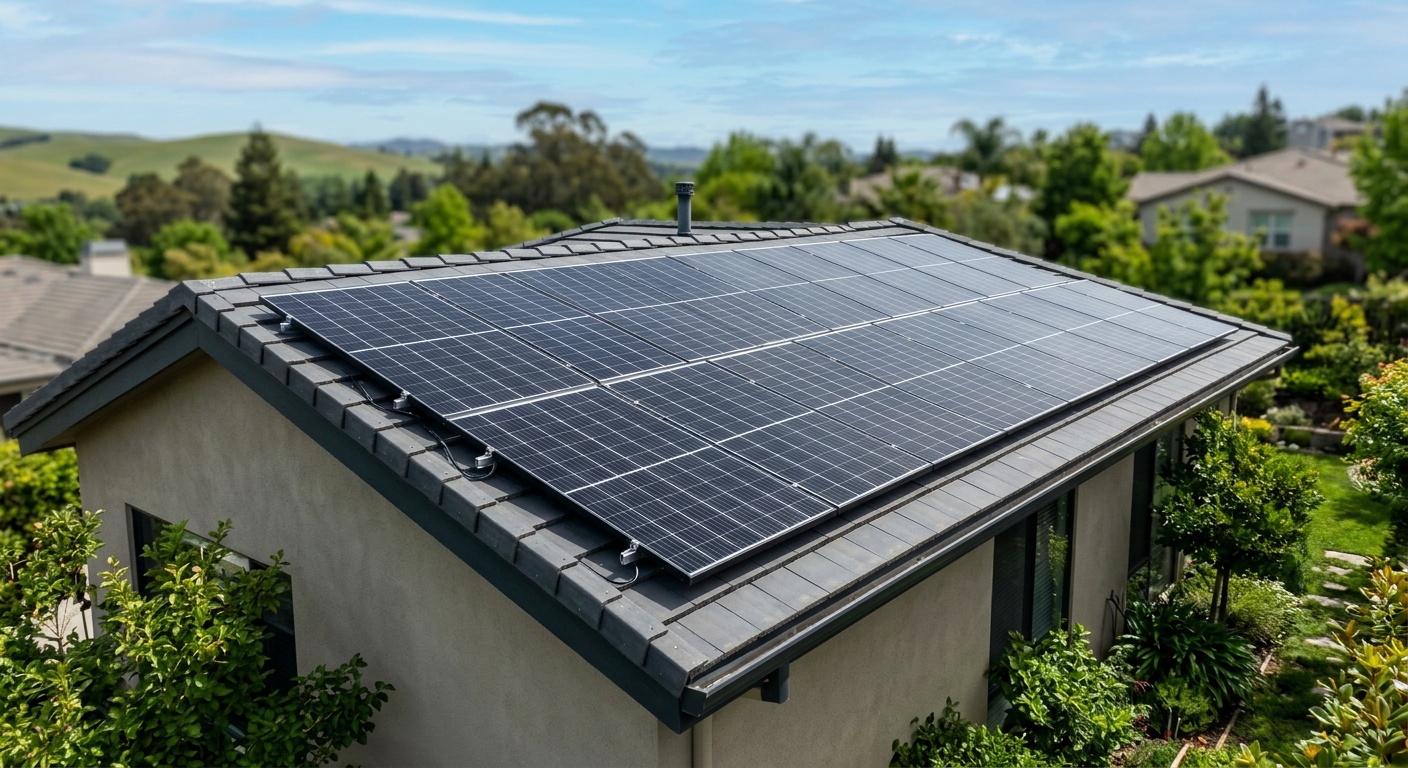
Do Solar Panels Add Value to Your Home in Northern Colorado?
Reading time: 12 minutes
You’ve probably noticed them everywhere lately — sleek panels gleaming on rooftops across Fort Collins, Loveland, Greeley, and Windsor. Maybe your neighbor just had a system installed, or you’ve been eyeing that south-facing slope of your roof and wondering: Is this actually worth it?
Here’s the straight talk: solar panels in Northern Colorado aren’t just an environmental statement anymore. In 2026, they’re a serious financial strategy — one that can meaningfully boost your home’s resale value, slash your monthly utility bills, and position your property as a premium listing in an increasingly eco-conscious real estate market.
But the real question isn’t whether solar adds value. It’s how much, under what conditions, and whether your specific situation makes the investment worthwhile. That’s exactly what we’re going to unpack — with real numbers, local context, and practical guidance tailored to Northern Colorado homeowners.
Table of Contents
- The Northern Colorado Solar Landscape in 2026
- How Much Value Do Solar Panels Actually Add?
- Northern Colorado-Specific Factors That Matter
- Real Homeowner Scenarios: Three Northern Colorado Stories
- Solar Investment Comparison: Key Metrics at a Glance
- Common Challenges and How to Overcome Them
- Incentives, Tax Credits, and Rebates Available in 2026
- Northern Colorado Solar ROI Visualization
- Frequently Asked Questions
- Your Solar Value Roadmap: Next Steps
The Northern Colorado Solar Landscape in 2026
Northern Colorado sits in one of the most solar-advantaged regions in the entire United States. The area receives an average of 300+ sunny days per year, and at elevations ranging from 4,900 to 5,500 feet above sea level, the thinner atmosphere means solar radiation hits panels with greater intensity than it would at lower elevations. Fort Collins, Loveland, Greeley, and the surrounding communities are genuinely ideal candidates for solar energy production.
According to the Colorado Energy Office’s 2025 annual report, residential solar installations in Larimer and Weld Counties grew by 23% year-over-year in 2025, making Northern Colorado one of the fastest-growing solar markets in the Mountain West. By early 2026, an estimated 1 in 8 homes in Fort Collins alone had some form of solar generation installed — a figure that was just 1 in 20 five years ago.
Xcel Energy, the primary utility provider for much of the region, has continued expanding its net metering programs and Solar*Rewards incentive structure through 2026. This means homeowners who generate excess electricity don’t just reduce their bills — they actually sell power back to the grid, creating a genuine income stream that improves the financial calculus dramatically.
The solar market itself has also matured significantly. Panel efficiency ratings that were considered cutting-edge in 2020 are now standard entry-level offerings. High-efficiency monocrystalline panels with 22–24% efficiency ratings are widely available from local installers, and battery storage systems from manufacturers like Tesla (Powerwall 3) and Enphase have dropped in cost by roughly 18% since 2023, according to Lawrence Berkeley National Laboratory’s Tracking the Sun 2025 report.
Why Northern Colorado Stands Out
Unlike the Front Range’s urban core in Denver, Northern Colorado’s real estate market has a distinctive character. The region blends agricultural heritage with university-town culture (Colorado State University anchors Fort Collins) and a rapidly growing tech and outdoor industry workforce. This demographic mix creates a buyer pool that genuinely values sustainability — which translates directly into solar premiums at the point of sale.
A 2025 Zillow survey found that 74% of homebuyers in mid-sized Western cities rated solar panels as a “desirable” or “very desirable” feature — up from 61% in 2022. In college towns and sustainability-forward communities like Fort Collins, that percentage trends even higher.
How Much Value Do Solar Panels Actually Add?
Let’s get specific — because vague assurances that “solar adds value” aren’t particularly useful when you’re deciding whether to spend $20,000 to $40,000 on an installation.
The most widely cited research comes from the Lawrence Berkeley National Laboratory, whose Tracking the Sun and Home Value studies consistently show that solar panels add a premium of approximately 3–4% to home sale prices nationally. For a $550,000 home (roughly the median in Fort Collins in early 2026), that translates to a value increase of $16,500 to $22,000.
However, Colorado-specific data from Zillow Research and the National Renewable Energy Laboratory (NREL) suggests that solar premiums in the Mountain West run slightly higher than the national average, averaging closer to 4.1% in markets like Fort Collins and Boulder. A Zillow analysis of Colorado home sales from 2023 through 2025 found that homes with solar sold for an average of 4.1% more than comparable non-solar homes in the same zip code.
At that premium rate, a median Fort Collins home could see a value addition of approximately $22,500. Combined with annual energy bill savings (typically $1,200–$2,400 per year for a well-sized system in this region), the financial case becomes compelling.
Owned vs. Leased Systems: A Critical Distinction
Here’s where many homeowners stumble — and it’s critically important. The value premium almost exclusively applies to owned solar systems. Leased systems and Power Purchase Agreements (PPAs), where a third-party company owns the panels and sells you electricity at a fixed rate, can actually complicate home sales.
When you list a home with a leased solar system, the buyer must qualify to assume the lease or you must pay it off before closing. Real estate agents across Northern Colorado consistently report that leased systems generate more hesitation from buyers than owned systems generate enthusiasm. If you’re considering solar partly as a home-value strategy, ownership — whether through cash purchase or a solar loan — is essential.
The good news: financing options have expanded significantly. In 2026, several Northern Colorado credit unions and regional banks offer solar-specific loan products at rates between 5.9% and 7.5%, with terms up to 20 years. At these rates, monthly loan payments can be structured to roughly equal (or even fall below) the monthly utility savings, making the investment cash-flow neutral from day one.
Northern Colorado-Specific Factors That Matter
National averages are a starting point, but Northern Colorado has unique characteristics that either enhance or constrain solar’s value-adding potential. Let’s examine the key variables.
HOA Restrictions: Approximately 35% of homes in Northern Colorado are governed by HOAs, according to the Colorado HOA Information and Resource Center. While Colorado’s Solar Access Law (C.R.S. § 38-30-168) prohibits HOAs from outright banning solar installations, they can impose “reasonable” aesthetic restrictions — such as requirements that panels not be visible from the street. In newer subdivisions around Windsor and Severance, this can limit installation flexibility. Always check your HOA covenants before signing a solar contract.
Roof Age and Condition: Northern Colorado’s hail season (typically May through August) is notoriously intense. Many installers recommend ensuring your roof has at least 10–15 years of useful life remaining before installing panels. A 2024 survey by the Colorado Roofing Association found that 62% of insurance claims in Larimer and Weld Counties involved hail damage. The good news: modern solar panels are built to withstand up to 1-inch hail at 60 mph, and many are rated for larger impacts. Still, if your roof needs replacement within five years, doing that work before solar installation saves the cost of removing and reinstalling panels later (typically $1,500–$3,500).
Tree Coverage and Shading: The older, tree-lined neighborhoods of Old Town Fort Collins and central Loveland can present shading challenges that reduce system efficiency. Micro-inverters or DC optimizers (offered by systems like Enphase and SolarEdge) can mitigate partial shading, but heavily shaded roofs may not be ideal candidates. A professional solar site assessment — typically offered free by reputable local installers — will tell you precisely what to expect.
Xcel Energy Net Metering Policy: As of 2026, Xcel Energy’s net metering policy in Colorado credits excess solar generation at the “avoided cost” rate rather than the full retail rate for new customers. This is a shift from the more generous retail rate crediting that older customers grandfathered in still receive. Understanding this distinction matters when calculating your payback period — ask your installer to use current net metering rates in their financial projections, not historical ones.
Real Homeowner Scenarios: Three Northern Colorado Stories
Abstract percentages are helpful. Real stories are better. Here are three composite scenarios based on common Northern Colorado solar situations in 2026.
Scenario 1 — The Fort Collins Move-Up Buyer: Sarah and David purchased a 2,400 sq ft home in the Fossil Creek neighborhood of Fort Collins in 2022 for $485,000. In 2024, they installed an owned 9.6 kW solar system for $24,800 after the federal tax credit. Their annual utility savings average $1,850. When they listed the home in early 2026 at $565,000, a certified appraiser added $21,000 in value for the solar system using the income approach (capitalizing the energy savings). The home sold in 11 days — faster than comparable non-solar listings averaging 28 days in the same quarter. Their effective net cost of the solar system, after value addition and energy savings over two years, was approximately $1,950.
Scenario 2 — The Greeley Long-Term Owner: Marcus installed a 7.2 kW system on his Greeley home in 2020 for $19,500 after incentives. By 2026, he has accumulated $11,100 in utility savings (six years × ~$1,850/year). His home’s value has appreciated from $310,000 to approximately $388,000, with roughly $12,000–$15,000 of that attributable to solar. He has no immediate plans to sell, so his focus is on long-term cash flow. At his current savings rate, he’ll reach full payback by 2031 — an 11-year payback period — after which the system generates pure savings for an additional 15+ years of panel life.
Scenario 3 — The Loveland HOA Complication: Jennifer and Tom wanted to install solar on their home in a Loveland master-planned community. Their HOA approved the installation but required panels to be flush-mounted and not extend above the roofline, eliminating the optimal tilt angle. Their installer recalculated production estimates and found the constrained installation would generate 14% less energy than an unrestricted system. They proceeded anyway, but this scenario illustrates why HOA review should happen before getting excited about projected savings — the numbers can shift meaningfully.
Solar Investment Comparison: Key Metrics at a Glance
| Metric | Owned System | Leased System / PPA | No Solar |
|---|---|---|---|
| Home Value Premium | +3.5–4.1% (approx. $19K–$23K on median Fort Collins home) | Minimal to neutral (lease liability can deter buyers) | Baseline (0%) |
| Annual Energy Savings | $1,200–$2,400/year | $600–$1,200/year (net of lease payments) | $0 |
| Typical Payback Period | 8–12 years (cash purchase) | N/A — no ownership equity built | N/A |
| Federal Tax Credit Eligibility (2026) | Yes — 30% ITC applies | No (credit goes to system owner) | N/A |
| Sale Complexity | Low — transfers as property asset | High — buyer must qualify to assume lease | Standard |
Common Challenges and How to Overcome Them
No investment is without friction. Here are the three most common challenges Northern Colorado homeowners face with solar — and practical strategies to navigate each one.
Challenge 1: Getting an Accurate Financial Projection
The solar industry’s sales process has improved significantly, but overpromising on savings estimates is still a risk. Some installers use optimistic shading assumptions, outdated electricity rate projections, or fail to account for Xcel Energy’s current (less generous) net metering structure.
How to overcome it: Request that any financial proposal include three scenarios — conservative, moderate, and optimistic — based on current net metering rates and your actual historical electricity consumption (pull 12 months of Xcel bills). Cross-reference production estimates using the National Renewable Energy Laboratory’s free PVWatts calculator, which allows you to input your specific address and system size. If an installer’s projections are significantly higher than PVWatts suggests, press them for an explanation.
Challenge 2: Navigating the Appraisal Process
One of the most frustrating experiences for solar homeowners selling their properties is watching an appraiser assign little to no value to a system worth tens of thousands of dollars. This happens when appraisers lack experience with solar valuation methods or default to a cost-minus-depreciation approach that significantly undervalues working systems.
How to overcome it: Document your solar system thoroughly before listing. Compile annual production data, utility savings records, warranty documentation, and the original installation cost. The Colorado Division of Real Estate recommends requesting an appraiser with specific solar valuation training or Appraisal Institute SolarEdge training. Fannie Mae’s Solar Guide provides appraisers with a standardized income approach for valuing solar — sharing this resource with your listing agent ensures they can advocate effectively on your behalf.
Challenge 3: Installer Quality and System Longevity
Northern Colorado has seen a proliferation of solar installers over the past five years, ranging from well-established local companies to national aggregators who subcontract to varying-quality crews. A poorly installed system doesn’t just underperform — it can create roof penetration issues, permit violations, and warranty complications that actively harm your home’s value.
How to overcome it: Verify that any installer holds a current Colorado Electrical License, carries appropriate liability insurance (minimum $1M general liability), and is a certified installer for the panel and inverter brands they’re proposing. Check the Better Business Bureau and Google Reviews, but also ask specifically for references from installations completed in your town within the past 18 months. NABCEP (North American Board of Certified Energy Practitioners) certification is the industry gold standard — prioritize installers with NABCEP-certified technicians on staff.
Incentives, Tax Credits, and Rebates Available in 2026
The financial incentive landscape for Northern Colorado solar homeowners in 2026 remains robust, though it requires attention to detail to capture every available benefit.
Federal Investment Tax Credit (ITC): The 30% federal solar tax credit, extended through the Inflation Reduction Act, remains fully available in 2026. For a $30,000 system, this represents a $9,000 direct reduction in your federal tax liability. This is a credit, not a deduction — it reduces what you owe dollar-for-dollar. Note that if your tax liability in one year is less than the credit amount, the unused portion carries forward to subsequent tax years.
Colorado Residential Energy Storage Tax Credit: For homeowners adding battery storage, Colorado offers a state tax credit of up to $2,500 per battery storage system installed in 2026, as part of the state’s clean energy transition incentives. This applies to systems like the Tesla Powerwall 3, Enphase IQ Battery 10T, and comparable products.
Xcel Energy Solar*Rewards Program: Xcel’s Solar*Rewards program continues to offer production-based incentives for qualifying systems in 2026. The incentive structure has evolved — check directly with Xcel for current per-kWh payment rates and program availability, as participation slots fill on a first-come basis each program year.
Fort Collins Utilities Solar Rebate: Homeowners served by Fort Collins Utilities (rather than Xcel) have access to the city’s own solar rebate program, which in 2025 offered $0.25 per watt of installed capacity, up to $750 for residential systems. Verify the current rebate schedule with Fort Collins Utilities directly, as program funding is allocated annually.
Property Tax Exemption: Colorado law exempts the added value of a residential solar energy system from property tax assessment. This means installing a $25,000 solar system that adds $20,000 to your home’s appraised value will not increase your annual property tax bill — a benefit worth $400–$600 per year in avoided tax for many Northern Colorado homeowners.
Northern Colorado Solar ROI Visualization
The following chart compares estimated 25-year net financial benefit across five common solar investment scenarios for Northern Colorado homeowners in 2026.
25-Year Net Financial Benefit by Scenario
(After system cost, incentives, energy savings, and estimated home value premium)
*Estimates based on 2026 Northern Colorado market data, federal ITC, state incentives, and Xcel Energy current net metering rates. Individual results will vary.
Frequently Asked Questions
Will solar panels hurt my home’s resale value if I need to sell quickly?
An owned solar system is very unlikely to hurt your resale value in Northern Colorado’s current market, and is far more likely to help — especially among the region’s environmentally conscious buyer demographic. The key risk factor is a leased system, which can extend days-on-market if buyers are unfamiliar with or reluctant to assume a lease. If speed of sale matters to you, ensure your system is owned outright and prepare documentation of annual savings to share with prospective buyers. In a 2025 analysis of Larimer County real estate transactions, solar-equipped homes with owned systems sold an average of 17 days faster than non-solar comparable properties.
How long do solar panels typically last, and does age affect home value?
Most modern solar panels carry 25-year performance warranties guaranteeing at least 80–85% of original output at end-of-warranty period. Inverters typically carry 10–15 year warranties and may need replacement once during the panel’s lifespan (cost: $1,500–$3,500). For home value purposes, appraisers and buyers do consider panel age — a 20-year-old system near end of warranty adds less value than a 5-year-old system. This is factored into the income capitalization appraisal approach, where remaining years of energy production directly influence assigned value. Installing panels sooner rather than later maximizes both your own benefit period and the value transferred to future buyers.
Do I need to tell my insurance company about solar panels?
Yes — and this is a step many homeowners overlook. You should notify your homeowner’s insurance provider before or immediately after installation. Solar panels are typically covered under your home’s dwelling coverage as a permanent fixture, but you may need to increase your coverage limits to account for the added value. Given Northern Colorado’s active hail season, confirm that your policy covers hail damage to solar equipment specifically. Most major insurers — including State Farm, Allstate, and USAA — cover solar panels under standard policies with proper notification, but premiums may increase modestly ($50–$150 per year is typical) to reflect the added coverage.
Your Solar Value Roadmap: Making Your Move in Northern Colorado
The evidence is clear: in Northern Colorado’s sunny, sustainability-oriented market, a properly owned and installed solar system is one of the most financially sound home improvement investments you can make in 2026. But strategic execution matters. Here’s your practical roadmap forward:
- Assess your roof and energy consumption first. Pull 12 months of electricity bills, check your roof’s age and condition, and do a shading analysis using a tool like Google’s Project Sunroof or NREL’s PVWatts. Know your starting point before you talk to a single installer.
- Get 3 competing quotes from NABCEP-certified local installers. Compare them on system size, panel efficiency, production estimates, warranty terms, and financing options — not just upfront price. Ask each installer to use current Xcel Energy net metering rates in their projections.
- Decide on ownership structure. If home value and resale are priorities, own the system outright or via a solar loan. Avoid leases unless your primary goal is simply reducing current utility costs with minimal upfront commitment.
- Capture every available incentive. File for the federal 30% ITC, explore Colorado’s battery storage credit if adding storage, and check both Xcel Energy’s Solar*Rewards program and any applicable municipal rebates. Don’t leave money on the table.
- Document everything for future resale. Keep installation records, production data, warranty documents, and annual savings summaries in a dedicated home file. When you eventually sell, this documentation is the difference between a well-supported appraisal and an undervalued asset.
Solar adoption is accelerating across Northern Colorado, and as grid electricity prices continue their historical upward trend, the energy cost savings from solar will only compound. Homes that invested in solar ownership in 2026 are likely to find themselves in an even stronger competitive position when the next wave of buyers — increasingly expecting sustainable features as standard — enters the market by 2029 and beyond.
The real question isn’t whether Northern Colorado solar adds value. It’s whether you can afford to wait while your neighbors capture that advantage first. Talk to a qualified local installer this month — your roof, your finances, and your future buyers will thank you.